






Public health officials in the Democratic Republic of Congo (DRC) now have keener insight into the profile of the longstanding HIV epidemic in the country following the release of preliminary findings from the Congo Démocratique Population‑based HIV Impact Assessment, also known as CODPHIA 2024, a representative household-based survey among adults (defined as those aged 15 years and older) to measure the impact of the HIV responses in Haut-Katanga and Lualaba, two neighboring provinces in the southeastern region of DRC.
The initial results from the survey were shared publicly for the first time in the form of a summary sheet published in conjunction with a virtual dissemination meeting held on June 16, 2026, and attended by representatives of the range of partners involved in planning, designing, and implementing the survey.
Funded by the President’s Emergency Plan for AIDS Relief (PEPFAR) through the US Centers for Disease Control and Prevention (CDC), CODPHIA 2024 was led by DRC’s Ministry of Public Health, Hygiene and Social Welfare through the National Public Health Institute (INSP) and the National HIV/AIDS and STI Control Program (PNLS), in collaboration with the National Multisectoral AIDS Control Program (PNMLS), the National Institute of Statistics (INS) and other partners. The survey was coordinated by INSP and PNLS and implemented with ICAP and the schools of public health (Kinshasa, Lubumbashi and Kolwezi), PNMLS, as well as provincial and referral hospitals, and local government authorities. The government of the DRC, local civil society organizations, and international development partners participated in steering committees and technical working groups during implementation.
CODPHIA 2024 is part of the global PHIA project, which has conducted more than 25 surveys designed to capture the state of the HIV epidemic in the most-affected countries.
“This was the first survey to estimate HIV incidence, provincial HIV prevalence, and provincial prevalence of viral load suppression in DRC,” said Erika Fazito, DHSc, ICAP’s director of the PHIA project. “The results describe provincial progress toward control of the HIV epidemic, assess the combined progress toward achieving the global 95-95-95 targets and highlight HIV program areas requiring strengthened interventions.”
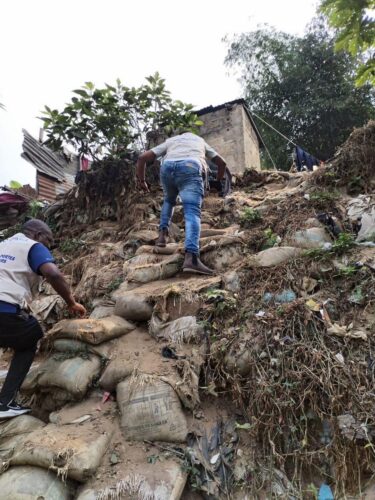
CODPHIA data collectors went to extraordinary lengths to collect the data needed for the survey
The data collection phase of CODPHIA 2024 took place from August through November 2024, during which time, the survey team visited nearly 4,800 eligible households across the two provinces to collect information about the uptake of HIV care and treatment services. For survey participants, CODPHIA 2024 offered HIV counseling and testing with immediate return of results.
During the dissemination meeting, key results of the survey were reviewed in detail by Dr. Francis Kabasubabo, a public health specialist from the School of Public Health of Kinshasa. In his review, he explained that the survey showed an annual HIV incidence among adults in Haut-Katanga and Lualaba combined of 0.10%, an HIV prevalence among adults in Haut-Katanga of 1.7%, an HIV prevalence among adults in Lualaba of 2.3%, and a viral load suppression rate among adults living with HIV of 37.7% and 37.8% in Haut-Katanga and Lualaba respectively.
With regard to the global HIV 95-95-95 targets, which point the way toward eventual epidemic control, the preliminary CODPHIA 2024 results demonstrated that 25.3% of adults living with HIV were aware of their HIV status; 92.3% of adults who were aware of their HIV status are on lifesaving antiretroviral therapy (ART); and 74.8% of adults who are on ART adults had viral load suppression, which prevents transmission of HIV to others.
“There are about three out of four adults living with HIV, who were unaware of their HIV status, and this is evidenced by our first 95, which was only 25.3%,” noted Dr. Kabasubabo (in French) in his analysis. “So, strengthening early HIV diagnosis and access to effective and sustainable treatment is essential to be able to reduce onward transmission of HIV in the two provinces.” He also noted that the results showed a higher burden of HIV among women as compared to men, suggesting that it may be critical to direct more HIV services toward women to advance progress.
Addressing the significance of the results, Dr. Aimé Mboyo, director of the PNLS, noted (in French) during the dissemination event: “We have these facts that challenge us and that call on us to reflect deeply in order to take action. Corrective measures that will allow us to adjust and adapt our response strategies both for screening, care and treatment, but also, and above all, for the ‘third 95’ (viral load suppression). And so, we are served while waiting for the final report which will bring us even more evidence, other essential data.”
“In using this data to accelerate progress towards controlling the epidemic…together, we can strengthen prevention, expand access to treatments, and ensure sustainable viral suppression for all those who need it,” said Dr. Francois Kitenge, associate director for Programs at the CDC (in French) during the meeting. “Behind these figures are human lives and this must sharpen our sense of responsibility a little more so that we can diversify our strategies in order to complete our mission.”
“CODPHIA was conducted within households, meaning in the community,” said Stéphania Koblavi-Deme, PharmD, PhD, ICAP’s country director in DRC and Côte d’Ivoire. “The first 95 (25.3%) reflects the low level of HIV status awareness outside of health facilities. This information is crucial for making decisions about targeting the HIV reservoir in the community in order to finally control the epidemic.”
The final report with full results from the survey along with data sets for use by researchers are scheduled to be made available later in the year on the PHIA website.


